Showing posts with label three thoughts. Show all posts

Wednesday, January 25, 2017

Three Thoughts about Signs

T.W. Fendley's and my booth at Archon
Three Thoughts about Signs
Brad R. Cook

Signs, signs, everywhere they’re signs… at conferences, conventions, book fairs, bookstores, events, talks and so many more. There are even different types, so many different types. It can drive an author mad… and we stare at thousands of words every day. Being overloaded is part of a writer’s typical day, so don’t let the maddening number of signs drive you into shut-in, hermit status.

There are banners, standing signs, retractable signs, easel signs, table tents, backdrops, placards, illuminated, and so many more. Which are the best for authors trying to get attention in the hall of a book convention? Depends. Space is an issue. Visibility is another. But really it comes down to what works best for your book, your series, and most importantly your budget.

1 – Think About Your Space
The six-foot retractable sign, or the hanging backdrop, are author standards. They frame your booth, or talking space, creating a zone that is all about the author and the book. Signs are eye catching, drawing readers to you, sometimes from as far away as the other side of the room. However, most of the time we find ourselves behind a table and thus the bottom half of these signs go unseen. The exception is at workshop talks, or other events where the full-length sign can be a really good idea. Also, if there is room on the side of your table they can be a great way of extending your space.

Design a sign that works for the space you use the most, and adapt for the other situations, unless you’re one of those super wealthy authors (mythical I know) and then create signs for every occasion.

2 – Creating Something that Stands Out
Every sign will make your booth stand out, for good or for bad. Most readers glance in one of two places – down at the table to see what you have out, or up at the space above the author’s face – both are meant to avoid the dreaded eye contact, which could lead to an unwanted conversation, and the pressure to purchase something. However, if your sign can captivate the reader, capture their attention and draw them to your table, you are more likely to make a sale. Make a sign that people want to stare at.

First, it needs to have depth, flat signs with plain backgrounds are great for readability but our eyes won’t linger like they will if it fades into the image of distant castle, or has all these eye catching designs in the foreground and background. Second, it needs to be colorful. Yes, bold, bright colors can be seen from miles away, but they may not be the best approach. Dark colors create a place to suck the reader in, and warm colors are places reader want to spend time. Light colored words on dark backgrounds can draw people in, but dark words on a light background are easier to read. Pick images and colors that work best for your book, make certain they match the imagery and color scheme you already have.

There are much better blogs on the psychology of color, the path of the consumer’s eye, and the science of the trade show booth. They are worth a read to help you best design your booth and maximize sales.

3 – Try Not to Clutter
Signs are good, bookmarks, candy, SWAG, and other material fill out your table to make you look like a seasoned author. But banners, standing signs, table signs, easel signs, bookmarks, rack cards, booklets, candy, SWAG, more SWAG, and having every inch of space taken up can overload the eye, the senses, and the mind, making your potential reader run away.

There is a fine line between looking sharp and looking like a madhouse. Finding that line is the trick all convention authors must find.


Hopefully this article has you thinking about signs. I recommend GotPrint.com, Vistaprint.com, or Displays2Go.com but there are many more sites to explore.

The picture shows T.W. Fendley’s sign and my sign side-by-side with our table in front of them. This is from Archon 2016, a sci-fi convention.


Brad R. Cook, author of the YA steampunk series, The Iron Chronicles. Iron Horsemen - http://www.amazon.com/Iron-Horsemen-The-Chronicles/dp/0989207951, Iron Zulu - http://www.amazon.com/Iron-Zulu-Book-Two-Chronicles/dp/0989207978, and Iron Lotus https://www.amazon.com/Iron-Lotus-Chronicles-Brad-Cook/dp/099639012X.  A member of SCBWI, he currently serves as Historian of St. Louis Writers Guild after three and half years as its President. Learn more at www.bradrcook.com, on Twitter @bradrcook https://twitter.com/bradrcook, or on his blog Thoughts from Midnight on tumblr http://bradrcook.tumblr.com/

Wednesday, July 20, 2016

Three Thoughts about Foreshadowing

Three Thoughts about Foreshadowing
Brad R. Cook

Foreshadowing… what could be coming in this article… we’ll have to find out.

Foreshadowing is defined as a warning or indication of a future event. A dramatic device used to inform the reader that an important plot-point will return later in the story, in a significant way.

In television it will be accompanied by rousing music like… dun, dun, duun

Foreshadowing is a wonderful way of teasing the reader. Arousing a sense of wonder, and making the reader ask questions, or develop their own theories of what is coming. Foreshadowing comes in two important parts, one scene or line that teases the future, and a scene or line later with the promised payoff. A false buildup can anger the reader, leaving them longing for a scene that will never come.  

Usually, foreshadowing will happen in the first act of a book, but it can happen in the second act, or even the beginning of a chapter. The important point is to leave the hints before the significant scene. On a personal note, I love when writers elude to something early on in a book and that gets paid off much later in the story, it builds a sense of having come full circle in the story.

Three thoughts about Foreshadowing:

1 – Elude to the Future:
The best foreshadowing drops hints as to what the important plot-point will be. Truly great writers will drop enough hints that the reader can’t figure out what is coming, but once the plot-point has happened the reader will remember the foreshadowing and all will become clear. A foreshadowing scene or line can come any time before the significant plot-point. From the beginning of the book all the way to right before the reveal.

2 – Don’t Give Too Many Details:
Tease the future to your audience. With too many details, the reader might figure out the plot-point before it arrives. Yes, most will continue reading to see if they are correct, but if the reader can figure out what is coming, if they figure out the big reveal before the writer unveils the scene, disappointment can ensue or worse, they could stop reading. A single line might be all it takes to foreshadow what is coming, maybe even something as simple as the weather. Keep the foreshadowing simple and the reader will appreciate not giving it away.

3 – Foreshadow the Big Moments:
Foreshadowing is a device that is best used sparingly. Overuse would be a tad ridiculous. Imagine a book where every little detail is foreshadowed. The writer would spend as much time eluding to what was coming, as they would be revealing the plot. Select the moments that create the most impact, like the climax, or a significant plot-point, but there is no need to foreshadow every event. You can even foreshadow the twist of the book. The important thing to remember is to not elude to every event in the book. Foreshadowing gives the important moments even more emphasis.

One of my favorite moments of foreshadowing came in The Empire Strikes Back, Luke sees his face in Vader’s mask on Dagobah and later finds out Vader is his father. Though as Anna Kendrick points out in Pitch Perfect, Vader means father.

What are you favorite foreshadowed moments in books or movies? Let us know in the comments.


Brad R. Cook, author of the YA steampunk series, The Iron Chronicles. Iron Horsemen - http://www.amazon.com/Iron-Horsemen-The-Chronicles/dp/0989207951 and Iron Zulu - http://www.amazon.com/Iron-Zulu-Book-Two-Chronicles/dp/0989207978.  A member of SCBWI, he currently serves as Historian of St. Louis Writers Guild after three and half years as its President. Learn more at www.bradrcook.com, on Twitter @bradrcook https://twitter.com/bradrcook, or on his blog Thoughts from Midnight on tumblr http://bradrcook.tumblr.com/

Thursday, May 26, 2016

Three Thoughts about Show Don’t Tell

Three Thoughts about Show Don’t Tell
By Brad R. Cook

Show Don’t Tell is probably the most reiterated writing rule… after write a good sentence… but what does it mean. Obviously, show the reader what the character is doing rather than tell them every action. There is so much more to this than three simple words. Show Don't Tell is easy to understand but impossible to master.

I think Anton Chekhov said it best:
“Don’t tell me the moon is shining; show me the glint of light on broken glass.”

Showing – using an active voice and giving rich descriptions to imply what is happening to a character and how those actions make them feel.
Telling – using a few words to inform the reader of what has transpired.

Here are three thoughts about Show Don’t Tell:

1 – Don’t Skip the Good Parts
Telling robs writers and readers of what they both want out of any story – vibrant descriptions that create images in their minds. Writers want to create them, it’s what we all strive to do, and readers want them out of every book they pick up. We read or write to be transported to a different world. Showing allows us to smell every scent, feel every surface, see every wonder.

Telling a scene skips over all the good parts and cuts to the bare bones of the story. Wouldn’t everyone rather have a thick, juicy, St. Louis style rib, than a bone with a little bit of meat covering it. Of course. So don’t skip the good parts. Stretch out the moment. Spend time describing the details. Make the reader feel every emotion. The book will be better and your reader will adore you. 

2 – Add Rich Descriptions
Showing is all about descriptions. Use them. I’m not talking about purple prose - overly elaborate, long-winded paragraphs without any white space on the page - I'm looking for vibrant and well worded passages. Add descriptions to enrich the senses. Make every word count, make the reader cling to every moment so they pray it never ends. Descriptions are one of the best ways to show what is going on in the scene. 

Don’t say he swung the sword and cut the bad guy. Have the flick of a wrist circle the enemy’s blade and thrust through his defenses to push into the thick leather armor and the flesh underneath. Show the enemy collapse on the blade. The sword penetrates the internal organs and emerge out the enemy’s back. Tell the reader how the character feels seeing the life drain from his foe. It will be a stronger scene than just saying he swung his sword and cut the bad guy.

3 – Make it a Conversation
The other technique, beside descriptions to show and not tell is to turn it into conversation. Rather than have a single throwaway line. Have two characters talk about it. Have the main character see what is happening and describe it to another. A great example of this is Ant-Man when Luis info dumps what is happening off screen. They could have had all those scenes but that would have slowed the story to a crawl. By having Luis tell Ant-Man about everything it goes from a very telling scene (literally) to a rather iconic and funny scene. Now there are calls online for Luis to recap the entire Marvel story line.


Not only do agents, publishers, and editors want you to Show Don’t Tell, the real reason we follow this writing rule is for the reader. Our job is to give readers the best, most immersive story possible. With so many books on the shelf, readers gravitate to the ones that provide a unique experience and rich descriptions are one way to impart that experience.

So spend a little time with each scene in your next manuscript figuring out where you can Show and not Tell the story.


Brad R. Cook, author of the YA steampunk series, The Iron Chronicles. Iron Horsemen - http://www.amazon.com/Iron-Horsemen-The-Chronicles/dp/0989207951 and Iron Zulu - http://www.amazon.com/Iron-Zulu-Book-Two-Chronicles/dp/0989207978.  A member of SCBWI, he currently serves as Historian of St. Louis Writers Guild after three and half years as its President. Learn more at www.bradrcook.com, on Twitter @bradrcook https://twitter.com/bradrcook, or on his blog Thoughts from Midnight on tumblr http://bradrcook.tumblr.com/


Wednesday, May 18, 2016

Three Thoughts about Steampunk!

Three Thoughts about Steampunk!
By Brad R. Cook

What is steampunk? Simply put – Victorian Science Fiction. Steampunk is a genre of movies and books that takes the possibilities of steam technology and the technology of the Victorian Age and then twists it into a myriad of possibilities. It’s part historical fiction, and part fantasy. But it’s all awesome. Steampunk is sky pirates on airships, gear technology, steam and steel mixed with corsets and top hats.

As a steampunk author, I have loved the genre since before it officially had a name, back when it was just Hollywood and authors infusing technology into their historical action flicks. I’m looking at you Wild Wild West. I love steampunk. I love taking what might have been and finding a plausible way to infuse it into my projects.

For anyone who doesn’t know about Steampunk and wants to, or for those like me who love all things steampunk – here are three thoughts about the genre.

1 - History is Steampunk!
One thing I love to do is go through the patents from the turn of the 20th century. The Victorian age was filled with dreamers who were only limited by their imagination. They came up with so many ideas that we might consider ludicrous but at the time were deemed plausible. Pictured is a German design for a saddle balloon. The designer believed that police would patrol the streets from a balloon, hovering above trouble. Today we have police in helicopters, so he wasn’t so off, but you have to love the ideas. There are so many more, I give a lecture on the great inventions of the Victorian age. You might have seen it at the St. Louis Science Center’s steampunk event but if not no worries I will be holding it again.

2 – Steampunk is Crafters and Storytellers
Steampunk is all about immersion. The many festivals around the country are about transporting people back into the age of Steampunk. We dress in period clothing, though adjusted to make it even cooler than history. Books and movies transport us to a variety of worlds. One of my favorite parts of Steampunk is that no two books, movies, or games are the same. Each is a unique world where steam, brass, and gears create the common thread that keeps them all cohesive.

3 – Steampunk is World Wide
It’s not just about the Victorian Age or London. James Ng is one of my favorite steampunk artists. He has this great Chinese steampunk aesthetic and I will fully admit that it inspired part of my next novel Iron Lotus. I wrote the Iron Chronicles as a worldwide adventure. The first book, Iron Horsemen, takes place in Europe. The second book, Iron Zulu, takes place in Africa. The third book, Iron Lotus, coming this fall, takes place in the Himalayas. With a grand ending in America just to make certain I got all the way around the world. Steampunk has gone all around the world. I’ve seen it in India, in China, in Australia, all over America, and of course in Europe and Russia. So it doesn’t matter who you are or where you are – Steampunk can be for you.

There is so much more, I might have to do another post. I didn’t even mention steampunk guns, watch part designs, furniture, steampunk computers and flash drives, or the entire top hat industry. There is too much steampunk to fit into any one post. Not to mention the other “punks” like dieselpunk, clockwork, atomicpunk, and more…

What’s your favorite part of steampunk, have a favorite author, artist, cosplayer, designer, or movie? Let us know in the comments.

Bonus!
The Milli-train from my second novel Iron Lotus. What could be more steampunk than a train with legs!


As always a big thank you to my illustrator Jennifer Stolzer for bringing my steampunk inventions to visual life. www.jenniferstolzer.com 


Brad R. Cook, author of the YA steampunk series, The Iron Chronicles. Iron Horsemen - http://www.amazon.com/Iron-Horsemen-The-Chronicles/dp/0989207951 and Iron Zulu - http://www.amazon.com/Iron-Zulu-Book-Two-Chronicles/dp/0989207978.  A member of SCBWI, he currently serves as Historian of St. Louis Writers Guild after three and half years as its President. Learn more at www.bradrcook.com, on Twitter @bradrcook https://twitter.com/bradrcook, or on his blog Thoughts from Midnight on tumblr http://bradrcook.tumblr.com/

Wednesday, May 11, 2016

Three Thoughts about Writing a Book

Three Thoughts about Writing a Book
Brad R. Cook

Everyone has a story to tell. Those of us that write them down earn the moniker – Writer. Those that persevere through the publishing process become known as Authors. Here’s the secret, anyone can write a story. As a people, we have told stories since the dawn of time. People go into work on Monday mornings and tell stories of their weekends. We tell children stories to get them to go to sleep. The trick, and why some authors get paid the big bucks, is to make it a good story.

Ernest Hemingway said, “There is nothing to writing. All you do is sit down at a typewriter and bleed.”

Stephen King said, “If you want to be a writer you must do two things above all others: read a lot and write a lot.”

Octavia Butler said, “First forget inspiration. Habit is more dependable. Habit will sustain you whether you’re inspired or not. Habit will help you finish and polish your stories. Inspiration won’t. Habit is persistence in practice.”

They said it best, but here are my three thoughts on writing a book…

1 – Be a storyteller
Writers are wordsmiths, gods of our own universes, grammar Nazis, and more, but beyond all of these we are storytellers. Learn the three act structure, the bell curve of story arcs, and writing in an active voice. These are important but what matters most is that a writer be an excellent storyteller. Everything else is fixable in edits.

2 – Write Regularly
Octavia Butler and Stephen King both emphasized this, why, because it is paramount to being an author. The only difference between wanting to be a writer and being a writer is putting words on the page. I try to write every day, when I have a deadline I will write several times a day. However, if you can only write once a week that is fine. Maybe a couple of hours every weekend is all you can manage. I promise if you stick with the writing eventually you’ll write The End, and there is no greater feeling than hitting that last period.

Guard this time like a dire wolf… everyone and everything will try and chip away at that time. The trick is to make it routine, then your muse, your body, and your mind will be ready to write when the time comes.

3 – Read
Read books in your genre, books by your favorite authors, even books on how to write. Read a variety of things, in different styles, different genres, and be certain to read for fun. Seeing how sentences are structured will improve your writing. Seeing what others are doing will let you know what are the tropes of your genre, the clichés, and what you can do that will stand out from the others.

I am a fan of authors rules, I read everyone I can get my hands on. I like to see what other writers think is important, but I also read books on writing. Like Stephen King’s On Writing, the Emotional Thesaurus, and Punctuation for Writers. But there are so many more. Remember, reading is fundamental…


So write. Revise. Write some more. Then Submit.

I leave you with this,
Brad R. Cook’s advice on writing – “The magic is in the rewriting.”


Do you have any advice for writers, a favorite book, or quote? Let us know in the comments.


Brad R. Cook, author of the YA steampunk series, The Iron Chronicles. Iron Horsemen - http://www.amazon.com/Iron-Horsemen-The-Chronicles/dp/0989207951 and Iron Zulu - http://www.amazon.com/Iron-Zulu-Book-Two-Chronicles/dp/0989207978.  A member of SCBWI, he currently serves as Historian of St. Louis Writers Guild after three and half years as its President. Learn more at www.bradrcook.com, on Twitter @bradrcook https://twitter.com/bradrcook, or on his blog Thoughts from Midnight on tumblr http://bradrcook.tumblr.com/


Thursday, April 28, 2016

Three Thoughts about Book Covers


Three Thoughts about Book Covers
By Brad R. Cook

Some book covers are artistic, some are photographic, some are horrific… but the cover is as important as the words inside. The classic cover, leather bound, gold embossed, with the cool ribbing along the spine put the focus on the material. The words almost didn’t matter. They were just there to let you know what was inside. With the switch to paper covers, we lost the cool look of the tome, but the importance of the cover image became the focus.

We’ve all heard the saying, “Don’t judge a book by its cover.” I wish it were true, but the reality is that everyone will judge your book by its cover. Readers want a cool cover, something that draws them in, bookstores want a professional cover to match the stock on their shelves, and publishers want an interesting cover that will stand out from the crowd. A good cover can elevate an okay book, and vault great books into mega-sales. It can make a reader spend two to three times or more the cost of a book just to snatch up the must have cover for a book with multiple editions.

A bad book cover can be a death nail to a book, killing sales, and giving the publishing house, and the author a bad reputation. There is a game, that myself, and a few other writers like to play when we’re in bookstores… Spot the Cover. It’s easy, as you pass through the shelves, spot the truly beautiful covers, and the absolutely horrible covers. Bad covers are usually blurry, have clashing colors, unidentifiable images, or are so basic that they look amateurish.

I’ve been a cover designer for a couple of years now, sure my covers for The Scribe, the monthly literary magazine published by St. Louis Writers Guild, are kind of simple, but keeping them interesting is still important. As I move into novel covers, I find that keeping up a level of high quality is the biggest challenge. So here are some of my thoughts about book covers.

1 – Depth and Layering
One of the most important things a cover can have is depth. Flat covers appear basic. They push the eye away. A cover with many layers draws the eye in. There should be a central image to hold the reader’s attention, and then images layered behind so the eye can move around. A simple image isn’t bad, bold colors can make a great cover, but the image still needs layers, or maybe a gradient for the background, to give the illusion of three dimensions. One of the worst things to happen to cover is pixilation of the images. Every layer needs to have a high dpi (dots per inch) to ensure the highest quality.

2 – Readable Names
After the central image, the two most important aspects of the cover are the title and the author’s name. They need to be easy to read both from a distance and in the thumbnail image as well. Having the right font is important. It needs to be big enough, clear enough, and thick enough to read. The lettering can be a script, or blocky, but it should mesh with the rest of the images. A thin script can get lost in a busy background, and a blocky font, if too squished together can be difficult to read. Focusing on the spacing, size, and color of the font will ensure that it can be read from a thumbnail to a poster.

3 – Consistency is Key
Covers should match the novel’s genre. A non-fiction historical novel with a flowing-haired, buff romance cover model, might give the wrong impression about what the book is about. It is also important the covers match, or at least hold a similar theme for a series of books. It will help readers know that each book is part of the series and will look good sitting on the shelf. Using the same font is one way to achieve this affect, as is using a similar theme for the cover images. Having the same artist create each cover is a good way to ensure this consistency.

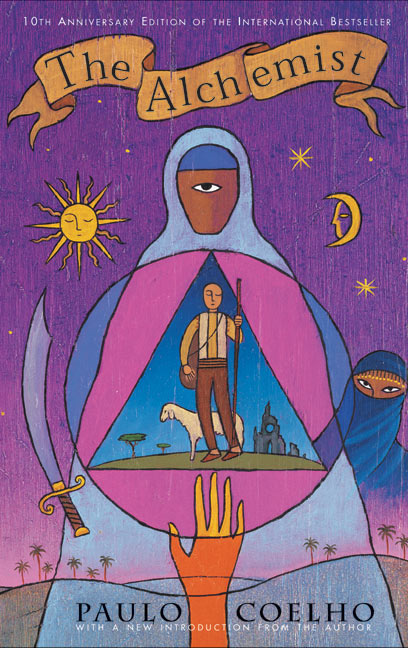
There are millions of book covers on the shelf, meaning there are plenty of covers to study. So make your next book cover the best it can be.  Identify what you like and what you don’t like, and suggest those ideas for the next book. Here are a few covers I really like to get your started.

One of those gorgeous older covers...


The abstract cover for The Alchemist.


One of the most iconic covers in history...


 Harry Potter has had several covers - this is the US version. 


One of my favorite covers.... it has so many layers and was done by noted illustrator Keith Thompson. He did a gorgeous map inside too. This edition is now highly sought after by collectors.


Brad R. Cook, author of the YA steampunk series, The Iron Chronicles. Iron Horsemen - http://www.amazon.com/Iron-Horsemen-The-Chronicles/dp/0989207951 and Iron Zulu - http://www.amazon.com/Iron-Zulu-Book-Two-Chronicles/dp/0989207978.  A member of SCBWI, he currently serves as Historian of St. Louis Writers Guild after three and half years as its President. Learn more at www.bradrcook.com, on Twitter @bradrcook https://twitter.com/bradrcook, or on his blog Thoughts from Midnight on tumblr http://bradrcook.tumblr.com/

Wednesday, March 23, 2016

Three Thoughts About Worldbuilding

Three Thoughts About Worldbuilding
By Brad R. Cook

Every writer creates a world, some more complex and unique than others. This isn’t just for the science fictions and fantasy writers out there. Even if you write contemporary, your world may be different from what the reader knows. Maybe they live in a different part of the country using different terms, and slang, or with unique customs. Worldbuilding may not be inventing a whole new world, but to the reader is a place they’ve never been.  

If your building a whole new world, or if you’re only molding this one, here a few thoughts to keep in mind.

1 – Remember the Details

Details are everything in Worldbuilding. As a steampunk author, my novels are set in the Victorian era, a time when the modern world was emerging. It is the details I provide that recreate that world. Plus once I add the steampunk elements, I have to describe in detail what something is, or no one will understand. A lot of people might know what a carriage looks like, four wheels, a driver’s perch, and passenger compartment, but do they know what a steamcarriage looks like? With a detailed description of the sound of the engine, where it sits, and how the driver controls the carriage, the reader will understand.

Same goes with any world. A unique world is not sold by the broad strokes of a writers paint brush – like this world has wizards. What sells the reader on a unique world, and more importantly what sets your world apart from any other writers are the details. How does the wizard cast magic – with words, hand gestures, elaborate potions, magic wands, or technology? Focus on the details and worldbuilding will come more easily.


2 – May Not Use Everything

Writers can spend weeks, months, or even years creating the details for their worlds. Writers can get lost in the minutia of a world and never write a single sentence, but they are important. However, that doesn’t mean you need to include them in every scene you write. The point is to impart enough details to immerse the reader in your world. Sometimes though, a coin is just a coin, or a carriage is just a carriage. If you describe what every coin in the characters pockets looks like the reader will get bored. In my novels I describe the steamcarriage, but I only mention what the reader needs to know about the regular carriages.

I always think about JRR Tolkien when I’m world building. The Hobbit and the Lord of the Rings trilogy are wonderful books with immersive worlds filled with details and yet, if you’ve read The Silmarillion which was published by his son after Tolkien’s death, then you know he created thousands of years of history. More languages with more words than would ever be used in the books, but they were there if he needed them. As writers, we might create more than we’ll ever need, but what’s important is that the writer provides what the reader needs.


3 – Everything is Connected

Nothing in the world exists in total isolation. Okay, yes there are creatures that live in caves, or fish that only live in a single pond. But, my point is that the cultures you create interact with the cultures and the environment in which they live. Plus, even within a culture, there is change. Every culture or environment is dynamic – even elves – our own world is classified by decades. Change is what people are about. We share or steal ideas from other cultures.

Environments are even more connected than cultures. The snow pack that falls on the mountains melts into the stream, which flows into the river, and is carried to the sea. When creating your world use real natural formations as an example. One of my favorite examples is temperature. Common sense says it will be cooler up the mountain and warmer in the valley, however, cold air settles. So depending on conditions cold air can settle in low parts and be warmer at a higher elevation. It’s all about the world you create.

Remember too about rivers. Cities tend to be built on their shores, along the entire length from the mountain head waters to the deltas. Something to remember though is that trade, fishing, transportation and ideas flow upstream and downstream. There is a symbiosis to everyone along a river, whether that is for good, or through conflict.


Build your world. Populate it with unique people, and interesting technology. Your reader will appreciate it, and make them want to visit more.


What is your favorite part of Worldbuilding? Let us know in the comments.


Brad R. Cook, author of the YA steampunk series, The Iron Chronicles. Iron Horsemen - http://www.amazon.com/Iron-Horsemen-The-Chronicles/dp/0989207951 and Iron Zulu - http://www.amazon.com/Iron-Zulu-Book-Two-Chronicles/dp/0989207978.  A member of SCBWI, he currently serves as Historian of St. Louis Writers Guild after three and half years as its President. Learn more at www.bradrcook.com, on Twitter @bradrcook https://twitter.com/bradrcook, or on his blog Thoughts from Midnight on tumblr http://bradrcook.tumblr.com/