Monday, April 15, 2013

Gerry Mandel celebrates Charlie Chaplin with book giveaway

Welcome to Gerry Mandel, whom I've had the pleasure of getting to know through the St. Louis Writers Guild. Gerry is a freelance writer, focusing on short stories, essays, plays, and his blog (when the spirit moves him). He has been published in Untamed Ink, Toyon, Big Muddy, and Palo Alto. 
     His novel about Charlie Chaplin, for whom he holds a lifetime passion, was published in 2010 and has been accepted by the Chaplin Archives in Montreaux, Switzerland. April 16 is Charlie Chaplin's birthday, so Gerry's dropped the Kindle price on SHADOW AND SUBSTANCE to $2.99 for the month of April! 
     Several of Gerry's plays have been  produced by St. Louis area theater companies. A documentary he wrote and directed about the Lewis and Clark sculpture on the St. Louis riverfront won an international award. He also produces video biographies for his company, The Life Preserver. He lives with his wife, Mary Lee, and two golden retrievers in Kirkwood.

Comment on The Writers' Lens between now and April 30 for a chance at winning your choice of a print or ebook of SHADOW AND SUBSTANCE. Mentioning Charlie Chaplin will double your chances! Be sure to leave your email address.
Gerry Mandel with Chaplin sculpture in Vevey, Switzerland, where
Chaplin lived after leaving the U.S. in 1952.
What inspired your latest book? I remember the moment when the “What if...” inspiration struck. I was in L.A. producing music tracks for Busch Beer TV spots. This was during my “Mad Men” career in advertising. The session took place at night at A&M Studios, on LaBrea at Sunset Blvd. The “A” is for Herb Alpert, who made a fortune in the 60’s and 70’s with the Tijuana Brass. With his pot of gold, he bought what had originally been the Chaplin Studios. One of the sound stages had been left intact and was declared a Historic Landmark.
     Around  10:30 or 11:00 on this particular night, Perry Botkin, the guy heading up the recording session, called for a half-hour break. Instead of talking with the musicians, as I usually did, I thought, “I wonder what the Chaplin stage feels like at night.” I walked down an empty hallway that led to the stage. The heavy metal door was unlocked. I opened it and peered into the dark space. Only the four red glowing letters in “Exit” offered any light. I stepped through, closed the door quietly behind me - I wasn’t sure if it was okay for me to be in here - and walked into the room.
     I thought about Chaplin, about all he accomplished here, how he revolutionized filmmaking and comedy, how he became the most famous man in the world. Then, having grown up reading dozens of science-fiction books and short stories, I thought, ‘If I concentrate, maybe I can contact Charlie.” At least conjure up some sensation of his presence. Needless to say, Charlie didn’t show up that night, but the idea for my book did. “What if someone from the Midwest comes out to LA on an assignment and establishes contact with Chaplin.”
     I made some notes in my hotel room that night, while the idea was fresh. Several years later I completed the first draft of my novel.


Charlie Chaplin out of his Little Tramp outfit, 
the way I "saw" him in my novel.
What do you think readers will like about your book? This is a question that always stumps me. What I think readers will like is often different from what they tell me they like. As far as my Chaplin book goes, my best guess is the aura of Hollywood today and yesterday; the portrayal of Chaplin in a realistic and entertaining manner; the flight of fancy I engage in as Charlie and the protagonist (Cooper Thiery) move between the present and the past. 
     I wasn’t sure how well the Chaplin character came through until I received some comments from Chaplin authors/experts. For instance, Kevin Brownlow is a highly respected figure in the world of film. He received an honorary Academy Award in 2010 for his continued role in film and cinema history and preservation, and produced a landmark documentary on Chaplin for the BBC several years ago. I had met him at a Buster Keaton conference in fall of 2012. He said, “I was impressed by your book. I enjoyed it so much I made it last as long as possible. It was fascinating to read a fictitious version of an event one has been through oneself...You are a very good writer and your imagination caught me to such an extent that I began to feel as though I had just encountered Chaplin myself!”
     After that review, I really didn’t care if I ever sold another book or not. Kevin made it all worthwhile.

Would you share a bit about your next project? I’ve started two of them. One is fiction. Working title: “The Eulogy Club.” A group of 4 friends decide to deliver eulogies to their friends while everyone is still alive and can appreciate the sentiments. Except some unexpected and unwanted observations arise. This, coupled with the male reluctance to appear vulnerable, causes some problems, threatens their relationships. Right now the “book” is somewhere between humorous and dark; I’m not sure where it will end up. 
      The other is non-fiction. This comes from my fascination with Chaplin. I’m considering a close look at his decision to make “The Great Dictator” in 1940 (actually began work on it in 1939) when everyone else in Hollywood was afraid to upset Hitler and Nazi Germany for fear of losing box-office. The book would say a lot about Chaplin’s brave stance and Hollywood’s cowardice.
     I'm more comfortable with fiction, and have never tried a non-fiction book. Still, the subject intrigues me.

How much fact is in your fiction? My novel is based in fact - on the character of Chaplin, his personality, his achievements, his fears. His relationships with W. R. Hearst, Roscoe Arbuckle, his mother. But many of the events are fiction. I made up several situations and encounters that never took place but I felt were necessary to keep the reader involved. The process of researching and writing a documentary in Hollywood is also factual. The landmarks, clubs, restaurants, parks, streets of Hollywood - now and 80 years ago - are real. I spent a lot of time in L.A. when I was in advertising. Several people who read the book, and know something about Chaplin’s life and career, have asked me “Did that really happen?” Which tells me the fiction was close to acceptance as fact. I think that’s paramount in this kind of novel, dealing with real history and characters. The fiction has to flow seamlessly from fact. The time travel device is, obviously fiction. At least I think it is.

What are your top three reasons for writing? I have just one reason, with many sub-reasons. The driving force is because I have to write. When I don’t write, I get irritable, impatient, critical of other writing, tough to be around. Just ask my wife. The act of writing, of moving it from my head onto paper or onto the computer screen, is pleasurable and fulfilling. I often ask myself, “Am I wasting my time?”, but I’ve pretty much learned to silence that inner critic. The sub-reasons include the need to “move” people, much as a musician might do with a soulful blues or a magnificent piano concerto. There's also a "look at me" element in there. I'm proud of being a writer. Also, I like to see see where the initial spark leads. Often it surprises me. I have no idea usually where the journey I’m about to take will end up. I know, some writers and instructors say, “You need a plan, an outline, a map. Otherwise how do you expect to get there?” I don’t feel that way. I like the thrill of the journey, the unexpected turns in the road, sheer drop-offs over cliffs, thunderstorms and rainbows. My third reason is simple. I can say, when it’s finished, “I did that.” Even if it never gets published, it’s still mine. Of course I’d rather everything I wrote got published.

What is your opinion about fiction involving time travel? This is a special category. As a reader, you either buy it or you don’t. As I mentioned before, I grew up with a steady diet of science-fiction: Bradbury, Van Vogt, Clarke, Del Rey, Heinlein, etc. I knew it was possible. Still do, in a way. But it’s not everybody’s cup of tea... or tumbler of bourbon, to get closer to the truth. My wife, when she read my first draft of the novel, said, “I like it, but it’d be better without that time travel stuff in there.”
     Several years ago, a movie with Christopher Reeves had a wide audience. It was “Somewhere in Time,” a love story the moved from today back in time. Prior to that, there was a novel by Jack Finney, “Time and Again.” It is considered a classic today, even though it deals in a realistic way with time travel.
     As a writer, I know I took a chance with time travel. That didn’t matter. This is the story I wanted to tell, in a manner in which I told it. 

Find SHADOW AND SUBSTANCE on AMAZON

SHADOW AND SUBSTANCE: Hollywood, today and during the 1930's, is the setting for this intriguing tale of an unknown writer, and a world-famous film artist who died over 20 years ago. The project becomes a conflict of loyalties, as the writer finds himself torn between his drive to succeed and his desire to protect Charlie Chaplin. Enter Charlie, now confronting the man whose job it is to discredit his legacy.


-----------------------------------------
This is T.W. Fendley. Thanks for reading and commenting on The Writers' Lens. You can find out more about me at www.twfendley.com


Friday, April 12, 2013

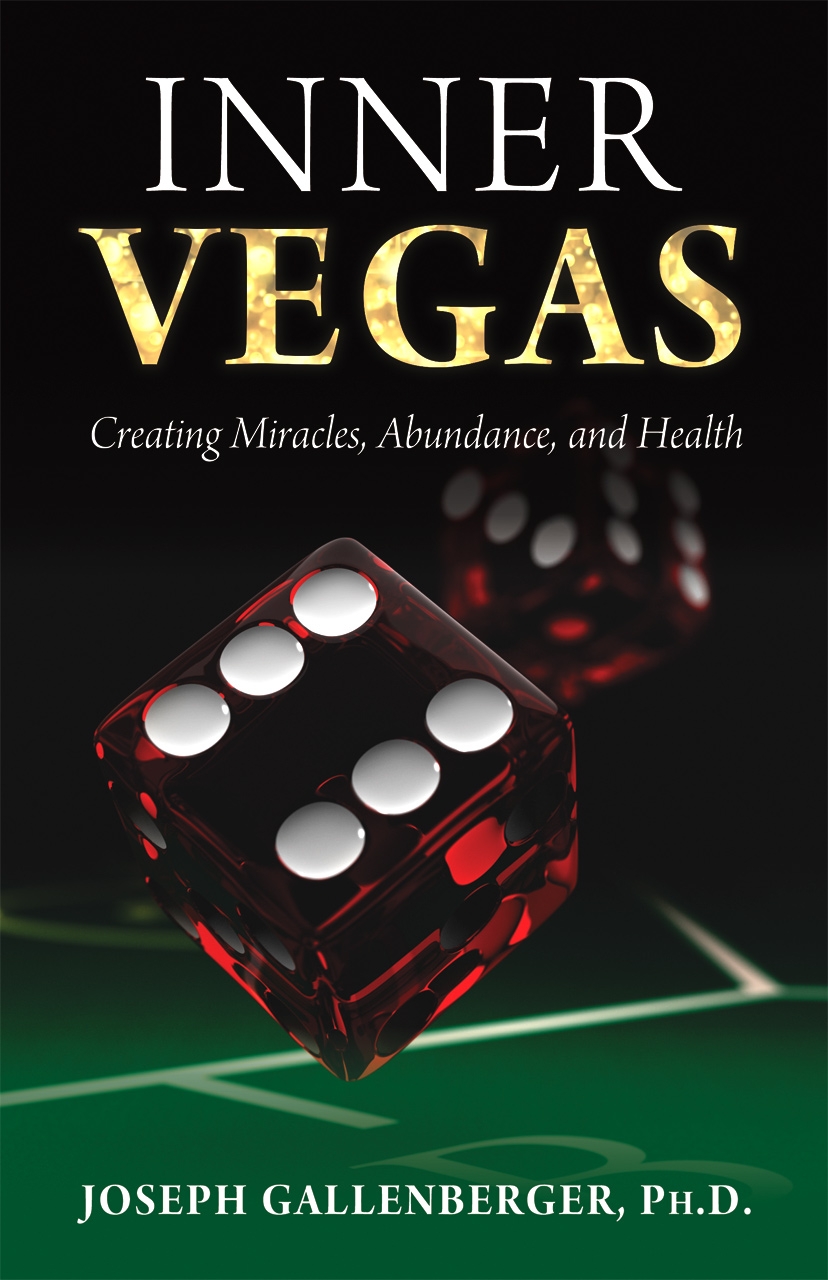
Gallenberger's book INNER VEGAS reveals heart-centered possibilities


Dr. Gallenberger is a clinical psychologist with thirty years experience as a therapist. His interest in human potential led him to explore how we can manifest what we desire. He has investigated psychokinesis, which is the ability to influence matter through non-physical means. PK can be used to bend metal and plastic, sprout seeds in your hand,  influence dice and slot machines, and create healing and abundance -  all just using the power of your mind.

After achieving powerful PK results at a university laboratory, and enhancing his methods over five years of study, Dr. Gallenberger began to teach this skill to groups. He has used his discoveries to host over sixty Inner Vegas Adventures™ where participants journey deeply into personal power. His students achieve dramatic physical and psychological healing, strong influence over dice and slot machines, and many marvelous manifestations in their lives at home.

Autographed print copies of Inner Vegas available at Gallenberger’s website, SyncCreation.com, through Amazon in print or on Kindle, and at Barnes and Noble.


Welcome to Dr. Joseph Gallenberger, whom I first met a couple of years ago as an instructor at The Monroe Institute. 

As a senior TMI facilitator, he developed the Institute’s highly successful MC² program, which teaches psychokinesis (PK), healing, and manifestation. Joe also developed SyncCreation®, a course in manifestation, which is the home-study version of the MC² program.

Dr. Gallenberger helps individuals and businesses become more creative and productive. A dynamic, heart-driven speaker, he is in demand internationally as a workshop presenter. His latest book INNER VEGAS: CREATING MIRACLES, ABUNDANCE AND HEALTH, takes us on a wild ride into world of psychokinesis where mind, energized by the heart, influences matter. INNER VEGAS will surprise you as it reveals what is possible when we apply intention and heart-centered energy to mold reality to our desires, and it will show you how to tame the dragons you may encounter along the way.

For more information visit Dr. Joseph Gallenberger’s website: www.SyncCreation.com.

How do you find time to write and do a demanding job? I am bursting with creativity and always have multiple projects going on. I am on the road teaching about 20 weeks a year. When home, I set aside time for designing CDs, courses and writing books. 

What do you think readers will like about your book? That it is a true story of my journey and shows how much potential we have to create a beautiful reality for our selves and how we might accomplish this based in science and practical experience.

What's the highest compliment someone could make about your writing? That is was clear, interesting and changed their life for the better.

What is your favorite writing/editing/query-reading snack? Pretzels -munch on them while concentrating

What tune/music could be the theme song for your book? I guess the theme from the movie Rocky as it conveys excitement, victory, and heart


INNER VEGAS: CREATING MIRACLES, ABUNDANCE AND HEALTH-Quantum Physics, PK, and Miracles of Manifestation and healing…all in the casinos of Las Vegas! Dr. Joe Gallenberger takes us on a journey of consciousness into the wild world of psychokinesis (PK) where the mind energized by the heart influences matter, resulting in seeds growing in a few minutes, lights lighting without being plugged into electricity, metal bending with a thought, rolling what you are thinking on dice, and where miracle healings become possible.

INNER VEGAS is a guide to using psychic abilities to create miracles in your life. It is grounded in science, experience, and astounding stories of success. Dr. Joe’s surprising discoveries take place in university laboratories, the prestigious Monroe Institute and even casino’s. INNER VEGAS will surprise you as it reveals what is possible when we apply intention and heart-centered energy to mold reality to our desires, and will it show you how to tame the dragons that you may encounter along the way.  


--------------------------------------------
This is T.W. Fendley. Thanks for reading and commenting on The Writers' Lens. You can find out more about me at www.twfendley.com.

Monday, April 8, 2013

Poetry Books for National Poetry Month!

Poetry Books for National Poetry Month
By Brad R. Cook

Happy National Poetry Month!

Poetry, we celebrate it for one month once a year in a giant festival… okay, so most of us will just write a couple of poems in April to join the celebration. But there are those people, poets, who breathe rhyme and speak in a strange language with words like iambic pentameter. They are elusive writers, but can usually be found at an area café open mic, or at one of the many readings held almost every night of the month. They may not use 100,000 words, but the few words they do use are chosen with extraordinary care.   

Recently, St. Louis Writers Guild hosted a night dedicated to the Missouri Poets Laureate. SLWG teamed with St. Louis Poetry Center and Maryville University to bring all three Missouri Poets Laureate together on one stage for the first time. The post of Missouri Poet Laureate was created in 2008, when Walter Bargen was selected. He was followed by David Clewell in 2010, and now William Trowbridge is the current poet laureate.

The evening which could have descended into high brow over-culture, turned out to be a showcase of how poetry can entertain, with readings that included pieces about nature, alien conspiracies, and even Bigfoot. Laughter filled the auditorium, and excitement kept the audience on the edge of their seats for all three poets. A successful night by all accounts.

So if you are looking for some great poems to celebrate National Poetry Month, allow me to share these books of poetry.  

William Trowbridge
Ship of Fool (Red Hen Press, 2011),
The Complete Book of Kong (Southeast Missouri State University Press, 2003),
Flickers, O Paradise, and Enter Dark Stranger (University of Arkansas Press, 2000, 1995, 1989),
Plus three chapbooks,
The Packing House Cantata (Camber Press, 2006),
The Four Seasons (Red Dragonfly Press, 2001),
The Book of Kong (Iowa State University Press, l986)
His sixth collection, Put This On, Please: New and Selected Poems, will be published in 2014 by Red Hen Press.

David Clewell
Is the author of eight collections of poetry, two book-length poems, and has been represented in more than fifty anthologies.
Taken Somehow By Surprise (University of Wisconsin Press, 2011)
Now We’re Getting Somewhere  
Blessings in Disguise

Walter Bargen
Has published fourteen books of poetry and two chapbooks.
The Feast (BkMk Press-UMKC, 2004),
Remedies for Vertigo (WordTech Communications, 2006),
West of West (Timberline Press, 2007),
Theban Traffic (WordTech Communications, 2008),
Days Like This Are Necessary: New & Selected Poems (BkMk Press-UMKC2009),
Endearing Ruins (Illiom-Verlag, Germany, 2012)

While we are talking about poetry, I thought I’d mention a few more poets you might want to read.

First allow me to highlight Missouri’s Senior Poet Laureate, Faye Adams. She is serving her second term at this post. Faye Adams is a wonderful poet and children’s author.

Beyond the Masks by Harvey Stanbrough
Poetry of a Lifetime by Marcel Toussaint
Darkness Never Far by Matthew Freeman
Otherwise, Soft White Ash by Kelli Allen
Fierce Consent by Catherine Rankovic
A Stranger Here Myself by Niki Nymark
And a quick shout out for the Haiku of Ben Moeller-Gaa

Looking for more great poetry, check out The River Styx Magazine
Or check out great poems by Dwight Bitikofer, Faye Adams, Marcel Toussaint, myself, and others in St. Louis Reflections. (the link is below)

If you’re still looking for poetry here are some of my favorite famous poets, read anything by…
Shel Silverstien
Edgar Allen Poe
e e cummings

There are so many more, too many for me to list…

Now it’s your turn, help us celebrate National Poetry Month by sharing your favorite poet, book of poetry, anthology, or poetry journal in the comments section below.

Also, if you want, you can participate in NaPoWriMO – National Poetry Writing Month, which is a competition to complete one poem for every day in April.


Brad R. Cook is a historical fantasy author and President of St. Louis Writers Guild. Please visit www.bradrcook.com or follow me on Twitter @bradrcook  https://twitter.com/bradrcook
St. Louis Reflections http://www.stlbooks.com/B009271-1211-51/Review.aspx

Wednesday, April 3, 2013

The Undefined Element of a Fight Scene


Today I am restarting a series of popular blogs on writing the fight scene. The following, with minor edits, is the only blog I plan to repost here from that series.

Over the course of a series of blogs on writing the fight scene, which you can find on my old blog site (http://davidalanlucas.blogspot.com/) , I have gone into the mechanics of fighting and how to try to capture those on the written page (novel, screenplay, short story, and so forth) .  I have written about the psychology and general strategy of the trained and untrained fighter. We have discussed the general places to strike and how the weaker opponent can easily defeat the stronger opponent. But, before we can step further, there is one element that we need to explore--an undefined element of passion.

I use the word passion with a great deal of trepidation. Most people might imagine passion to be emotion. It's emotion, but only a portion of it in the context with which I use it here. The word passion is used here to define the determination and the core from which your character (or you yourself in real life) drive yourself to win the conflict. If you have watched and read enough fight scenes you have seen the well written scenes and the ones that have struck you falsely. Not because the fighter or fighters did something that was improbable (or simply impossible). It was because the fight scene seemed arbitrary--derived solely because some formula said there had to be an act of conflict at that spot.

The good fight scenes are organically grown from your protagonist need to confront the antagonist. Ask yourself:

Why is the protagonist fighting? A fight is dangerous  or even deadly.
Why don't they just run away? 
What does the protagonist risk if he fails loses?

The really good fight scenes are not only organically grown from the protagonist, but the antagonist.  Your antagonist doesn't think he is the antagonist. He thinks he is the hero.  Treat him as such. Ask yourself:

Why is the antagonist fighting? A fight is dangerous or even deadly.
Why don't they just run away? 
What does the antagonist risk if he fails loses?

The outstanding and memorable fight scenes take this organic growth even further, by asking the following questions:

What does the character gain if they lose the fight?
What do they lose if they win?
What do they win if they lose?

You may have just blinked reading these last questions, so let us explore them by using a few examples. While I don't know what you read or watch, I will use a few examples:

In Star Wars--the Original trilogy--Luke Skywalker fights Darth Vader, his father twice. In the first fight, he risks losing his life. Vader only cuts his hand off and rips off his innocence by declaring Luke was his son. In the second fight, Luke is determined to win his father back to side of light. He first risks losing his life. What does he win? He does bring his father back, but at the same time he loses his father.
In Star Wars--the prequel trilogy  (made after the original series)--Obi-Wan Kenobi fights Anakin Skywalker, his pupil and self-proclaimed brother. He has to stop Anakin and try to get him to come back to the light. Obi-Wan risks losing his life and possible failure as well as losing his friends to the dark side. Obi-Wan wins the fight. He does lose his friend and leaves him for dead (or dying really). Anakin loses all he loved for a mechanical suit and the dark side.
In Dr. Horrible's Sing-Along Blog, Dr. Horrible, in this tongue-in-cheek reverse tale of where the villain is the hero, goes to fight his arch-nemesis Captain Hammer. Dr. Horrible risks losing his opportunity to join the Evil League of Evil that he dreams to join and his life--for failure is clearly to be met with his own death. The opposite of this is what he will gain if he wins.  What he does lose when he wins is the love of his life, Penny, as she dies in his arms and perhaps his own desire to be what he has become--for in the end, after all the celebration, he is alone and looks lost to himself.

There are a lot of other examples I could have chosen from. Instead, I ask if any of my readers would take a moment, think about the questions above, and write in the comments about a story that you can diagram as the above.

Thank you for reading and please visit www.davidalanlucas.com and www.thewriterslens.com. You can also follow me on twitter @Owlkenpowriter and the Writer’s Lens @TheWritersLens. Fiction is the world where the philosopher is the most free in our society to explore the human condition as he chooses.

Monday, April 1, 2013

A Quick Chat with 'Wreditor' Suzann Ledbetter Ellingsworth

A Quick Chat with 'Wreditor' Suzann Ledbetter Ellingsworth
By Brad R. Cook

T.W. Fendley and I recently had the chance to talk with noted author and editor, Suzann Ledbetter Ellingsworth. We asked her a few questions and she gave us a few answers!

Suzann Ledbetter Ellingsworth
Suzann Ledbetter Ellingsworth is multi-published, fiction and nonfiction writer and an editor--in her parlance, a wreditor.  Suzann is a Writers Hall of Fame of America inductee, past faculty member for Washington University's Summer Institute, and a contributing editor for Family Circle magazine for a decade. 

By Suzann's definition, wrediting is an editing perspective evolved from experience on both sides of traditional publishing: as a writer undergoing the editorial process, and as an editor teaming with writers to bring their stories to compelling life.  Teaching is the core of Suzann's private client editing process.  Her unique techniques will hone and polish a current project, and pay dividends applicable to future ones, too.  

Learn about her editing services at www.TheWalkingDeadline.com
All her books are available on Amazon and both websites: 

Look for the ebook A Lady Never Meddles with Murder, the sequel to A Lady Never Trifles with Thieves.  Coming soon.

Suzann will be speaking at St. Louis Writers Guild’s Workshops for Writers on Saturday, April 6th, 2013! T.W. and I wanted to give her a chance to introduce herself, and allow everyone else to learn about this amazing writer and editor!

How much fact is in your fiction?
From 60-90%, the difference generally between contemporary novels (60%) and historical novels, (90%) all of which were based on real people and/or real events. It's mandatory fiction tell the truth, which lends to a factual infrastructure. Characters and situations must be relatable and identifiable to a real-time reader. It doesn't matter whether the lead character is a rabbit, a Roman slave or a Rhode Island nuclear physicist. Authenticity on all levels is key, which means portraying a relatable, complicated, human being commensurate with the back-drop era, setting, avocation/vocation, societal and cultural mores, et al.

Nothing kills faster a story for a reader than a writer's arrogant and dumb excuse fiction is lies, all lies, so to heck with a knowing his/her stuff to best, conscientious ability. To believe otherwise cheats the writer's creative bounds, and to my mind, disrespects the intelligence of a reader willing to devote time, and likely, money, to a story. That isn't to say a writer's scrupulous efforts won't net an error or six. Writers are human, too. But make the majority authentic, right, and relatable, and the weensy, accidental boo-boos will be forgiven.


What makes your book/characters unique?
Honest, I'm not being a smarty-pants, but what makes my books and characters unique is I wrote them. I could hand over the synopsis to any one of them to another writer, and beyond the blueprint aspect, the other writer's novel wouldn't resemble mine at all. If I qualify for a unique label at all, it's because writing herded me from magazine articles to book-length humor to biography to fiction. Except on closer examination, the three primary facets--humor, history and biography--pretty much interweave in my novels, too. What may seem like a stray from nonfiction to fiction is nearer a skip, than a leap. At root is an ongoing fascination with what makes people tick. If history is circular, the human emotional trajectory is pretty much linear. If it weren't, contemporary readers couldn't possibly relate to Eyre's or Poe's or Homer's. The more the surrounds change, the more the people populating them remain the same.


If you could borrow one person’s zest for writing and/or life, whose and why?

Hands down, Stephen King. He's a writer's writer. Nothing has stopped or much gotten in the way of being a writer. It isn't what he does for a living, a writer is who he is, whether an individual reader likes, loves, or detests his storytelling. Mr. King hasn't written for the money--hasn't needed the financial proceeds from his work--for decades. Yet a life-threatening hit-and-run accident didn't silence him for long, and pneumonia didn't stop him from accepting long-deserved National Book Award honors. No one I can think of more respects the storytelling gift serendipitously bestowed on him--and by extension, fears more what life would be, or could be, if it just as serendipitously winked out one morning.


Not every idea is a winner. Written or not, what’s the most ill-conceived story idea you’ve ever had?

I chose this question, because ill-conceived story ideas never get much beyond my "Hmm . . ." stage. The reason they don't, is I'm a rabid disciple of the power of synopsis. If a hot, shiny idea can't go the synopsis distance, it's brain flatulence, not inspiration. Why any writer would begrudge the time and effort to whip up a synopsis-style test-drive is beyond me. Seat-of-the-pants dive-ins may sound all artsy and creative and free, but in actuality, are self-laid traps. Freestyling is all but guaranteed to turn an already fraught job into a self-imposed obstacle course laced with plot-exploding devices. At the least, seat-of-the-pants imposes far more start-overs, back-ups and (assuming one doesn't quit when obviously behind) post-draft revisions, than laying the synopsis groundwork in the first place.

Ideas aren't a dime a dozen. A dime a gross, maybe, at most. They're imagination's guppies: the more you have, the more you will have. A jillion too many to ever write to completion.


The Writers’ Lens is about “Bringing fiction into focus.” What brings your writing into focus – the characters, the stories, the love of words?

The characters. Always, always the characters. Characters are plot. Characters are story. Characters are the sole reason for stories. Take any novel's alleged plot – of which there are either seven basic ones or twelve, depending on whether you extrapolate the original seven deadly sins to squeeze out five more. Now change original characters to a different cast of characters. By no means will the resulting story resemble the original. West Side Story's plot is Romeo & Juliet's plot. Except it isn't, and not simply because the settings/eras differ.

Plot is a 20 x 40-foot concrete slab. What rises from it, be it a 3b/2ba rancher, a Tudor, an A-frame, a Cape Cod, Victorian, a burger joint, or a multi-car garage is characterization.

Many thanks to Suzann for agreeing to chat with T.W. and I

Want to learn more from Suzann Ledbetter Ellingsworth?
She’ll be presenting at St. Louis Writers Guild Workshops for Writers…

The 12 Step Program: How to SHOW, How to NOT Tell
Presented by
Suzann Ledbetter Ellingsworth
Writers of America Hall of Fame Inductee and Editor

Saturday, April 6, 2013
10 am to Noon
Kirkwood Community Center
111 S Geyer Rd. Kirkwood, MO
Free for SLWG Members, $5 for non-members

For more information visit www.stlwritersguild.net

Brad R. Cook is a historical fantasy author and President of St. Louis Writers Guild. Please visit www.bradrcook.com or follow me on Twitter @bradrcook  https://twitter.com/bradrcook